Professional Services
Robotic Process Automation
Automate repetitive tasks so your team can focus on what matters most. We use robotic process automation to deliver measurable efficiency for your business.
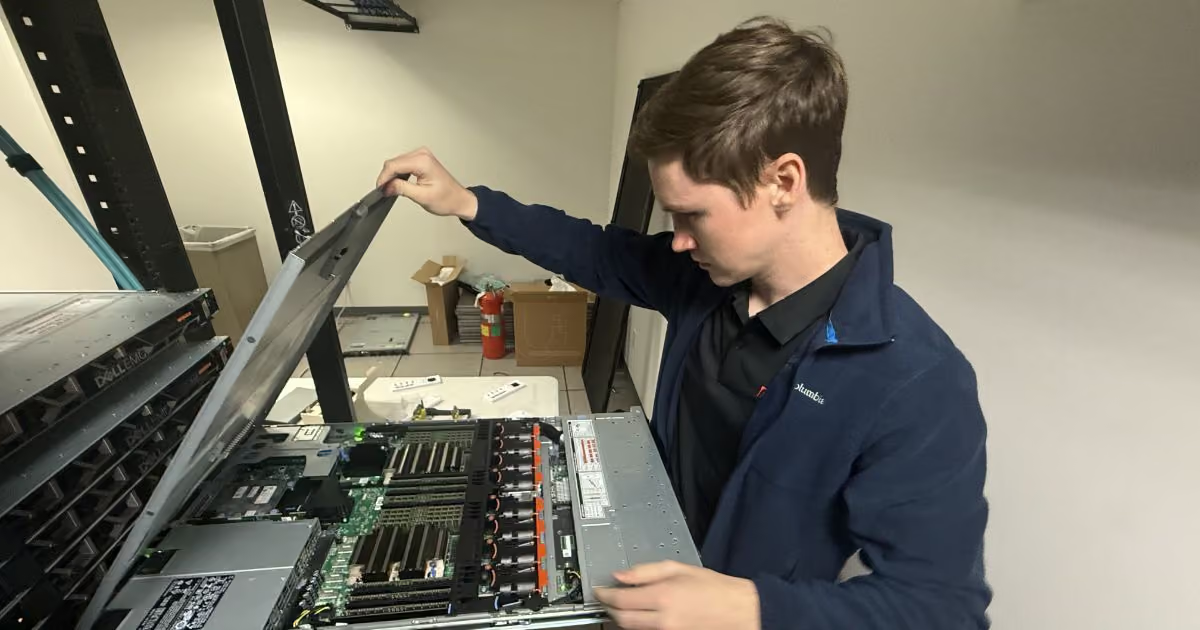












Are manual tasks slowing your business down?
Manual processes can waste valuable time and often lead to costly errors. If your team spends hours on repetitive work, you risk falling behind competitors who have already embraced automation.
With process mapping and the right automation tools, you can achieve over 30% efficiency gains. MBPS LLC helps businesses averaging 20 employees streamline their operations and eliminate bottlenecks with robotic process automation RPA services.
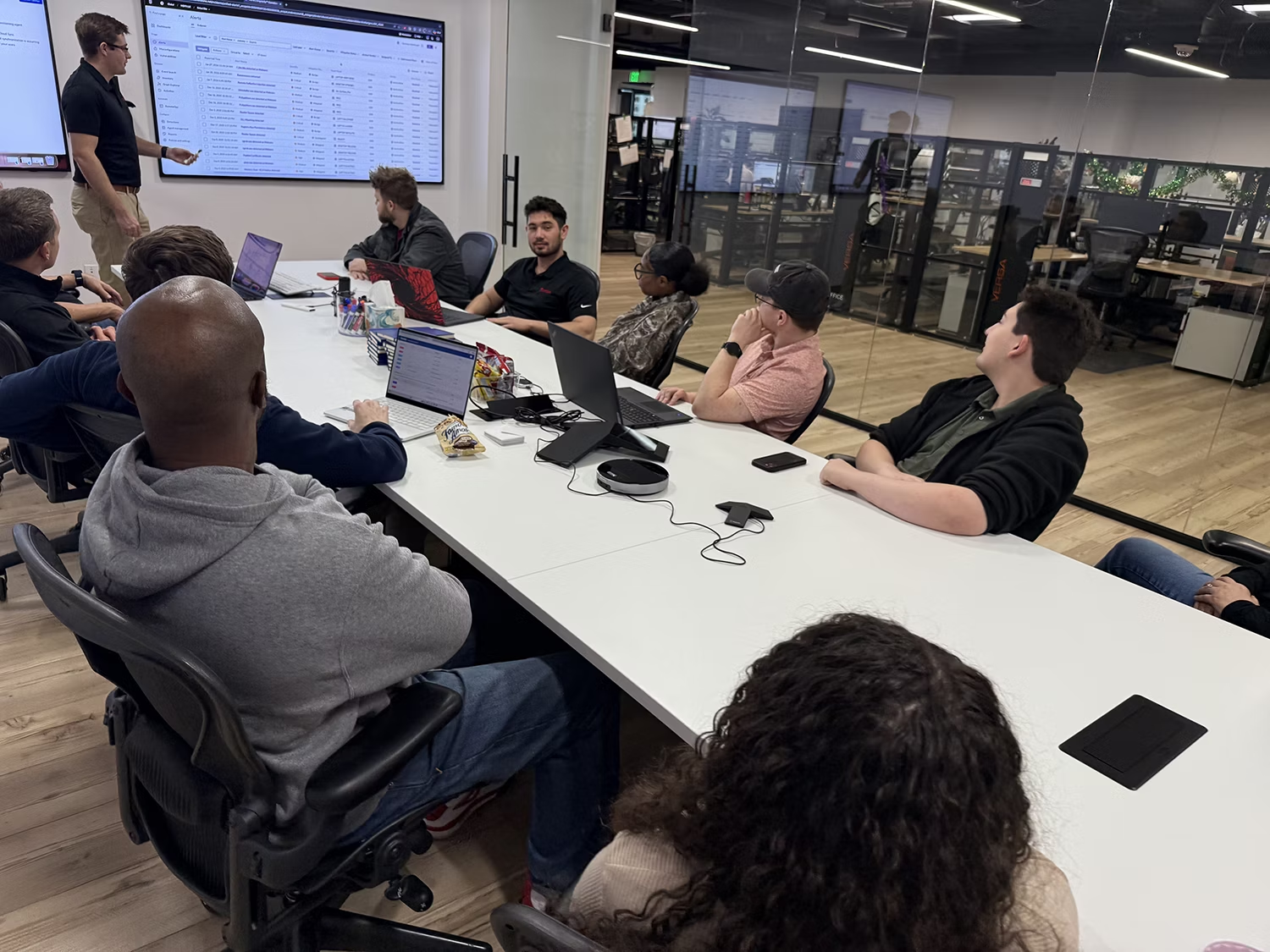
Unlock new efficiency with automation solutions
Robotic process automation RPA services help you cut down on repetitive tasks and free your staff for higher-value work. By automating workflows, your business can respond faster and reduce costly mistakes.
At MBPS LLC, we use leading platforms like Power Automate and UiPath to deliver reliable process automation. Our team works closely with you to identify the best opportunities for automation and ensure a smooth transition.
With our expertise in RPA, your business can enjoy improved productivity and measurable cost savings. You get more done with less effort, so your team can focus on growth.
What is robotic process automation?
Robotic process automation is a technology that uses software robots to automate repetitive business tasks. It helps companies reduce manual work, increase accuracy, and speed up operations.
MBPS LLC designs and implements custom automation solutions tailored to your unique needs. We analyze your processes, map out the steps, and build automated workflows that fit your business.
By leveraging RPA robotic process automation, you can streamline everything from data entry to approvals. This means fewer errors, faster turnaround times, and more time for your team to focus on strategic projects.
How MBPS LLC helps your business thrive
Our approach to robotic process automation RPA services starts with understanding your business goals. We work with organizations averaging 20 employees, so our solutions are right-sized for your needs.
We use proven tools like Power Automate and UiPath to automate your most time-consuming tasks. Our team guides you through every step, from process mapping to implementation and ongoing support.
With MBPS LLC, you gain a partner who is committed to delivering real results. Your business benefits from increased efficiency, reduced costs, and a more agile workforce.
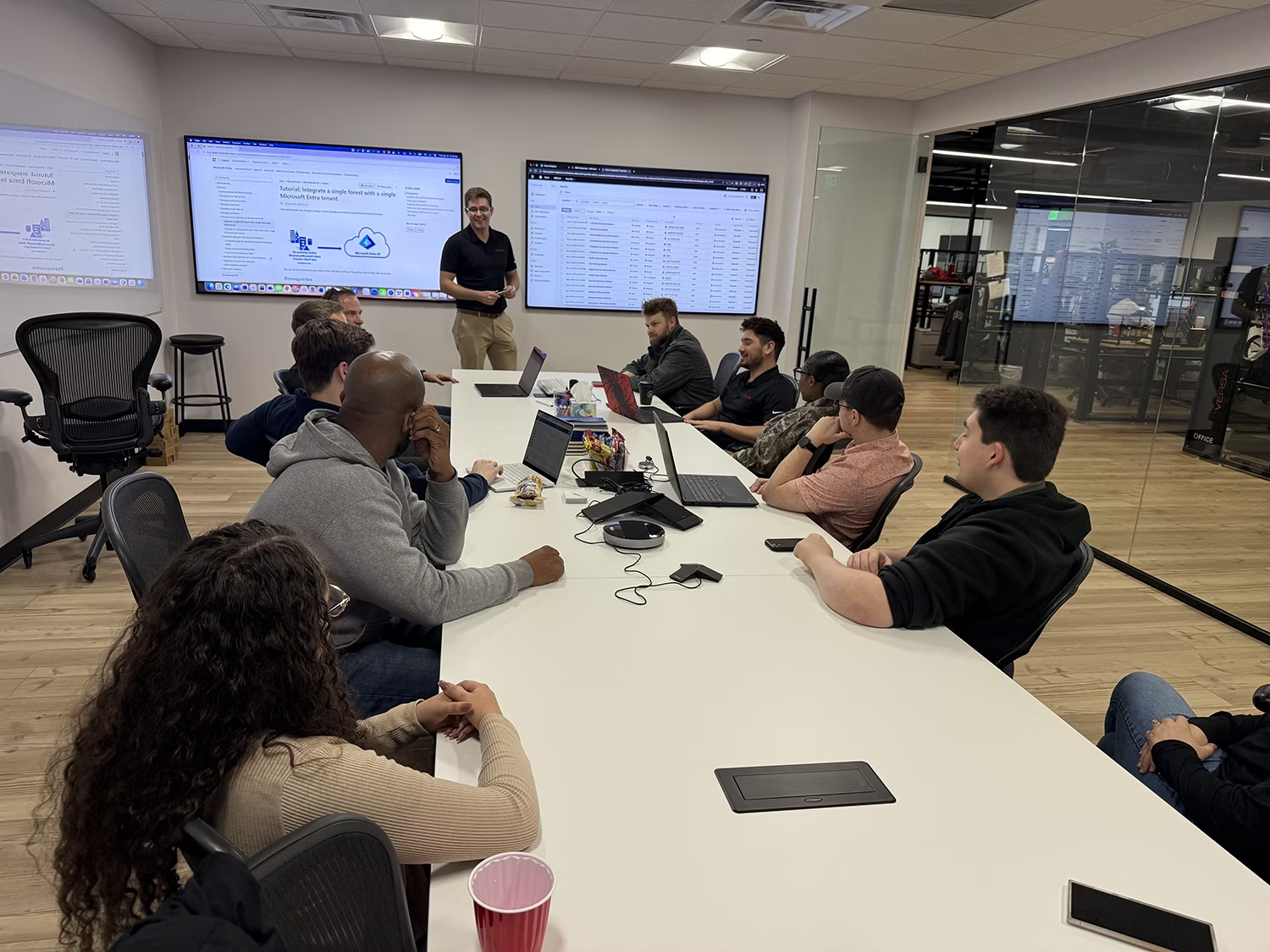
Why choose MBPS LLC for automation?
MBPS LLC brings deep experience in robotic process automation and a focus on measurable results. We tailor every solution to your business, ensuring you get the most value from automation.
- Achieve over 30% process efficiency gains with automation.
- We use trusted platforms like Power Automate and UiPath.
- Process mapping ensures every workflow is optimized for your needs.
- Reduce manual errors and speed up repetitive tasks.
- Custom RPA solutions for businesses averaging 20 employees.
Talk to an IT expert
Let’s automate your business for real results. Contact us to see how robotic process automation rpa services can help.
How a robotic process automation project actually runs
Most failed automation projects fail for the same reason: somebody automated a process that should have been fixed or deleted first. Getting this right is more about choosing the work than about the tooling.
Picking the right process to automate
Good candidates share a shape. They are high volume, rule based, stable, and they touch systems that do not talk to each other. Bad candidates require judgement, change every quarter, or happen four times a year. We start by ranking your candidates on volume, hours consumed and error rate, so the first build is one with an obvious payback.
Documenting the process as it is, not as people think it is
Written procedures and actual practice diverge, usually because someone found a workaround years ago and never mentioned it. We record the process as performed, including the exceptions, because an automation built from the tidy version breaks the first time reality shows up.
Fixing before automating
If a process has redundant approvals or duplicated data entry, automating it locks in the waste and makes it harder to remove later. Simplification comes first. Occasionally this makes the automation unnecessary, which is a good outcome even though it is a smaller invoice.
Building, with exception handling as the main event
The happy path is the easy part. The value is in what happens when a field is blank, a system times out or a record does not match. Every automation gets defined handling for those cases and an escalation route to a human, because silent failure is worse than no automation at all.
Where RPA ends and integration begins
Robotic process automation drives the user interface, which makes it ideal for systems with no API and terrible for systems that have one. Where a proper integration is available we build that instead, because it is faster and does not break when a vendor moves a button. Being honest about that line is what keeps these projects from ageing badly.
Ongoing maintenance
Automations are not finished when they go live. Applications update, screens change and business rules move. Ongoing monitoring and maintenance are part of the engagement, since an unmaintained bot quietly stops working and nobody notices until the backlog surfaces.
Frequently asked questions
1What kinds of process are worth automating?
Repetitive, rule based work with steady volume: invoice and statement processing, moving data between systems that do not integrate, report assembly, onboarding and offboarding checklists, and reconciliation. If a competent person could follow written instructions without judgement calls, it is a candidate.
2What is the difference between RPA and general IT automation?
RPA imitates a person using an application through its interface, which is why it works with legacy systems that offer no other way in. General IT automation connects systems directly through APIs and scripts. Direct integration is more robust when it is available, so we use RPA where it is genuinely the right tool rather than by default.
3How long before an automation pays for itself?
It depends entirely on the hours the process consumes today, which is why we measure that before quoting. A well chosen first automation usually targets something costing several hours every week. If we cannot show you the arithmetic up front, it is the wrong process to start with.
4Will this replace jobs?
In the businesses we work with it usually removes the least valuable part of somebody role rather than the role. The work that gets automated is the copying, rekeying and checking that people dislike most. Being clear about this internally, early, matters more than the technology does.
5What happens when a system we automated gets updated?
That is the main ongoing risk, and it is why maintenance is part of the service. Automations are monitored so a break surfaces as an alert rather than as a backlog discovered a fortnight later, and we adjust them when vendors change their applications.
6Do we need to be a large company for this to make sense?
No. Smaller businesses often see it sooner, because the repetitive work is concentrated in one or two people and removing it frees capacity that is immediately visible. Most of our automation clients are around twenty users.