The physical layer, done right
Network Infrastructure Services
Network infrastructure services cover the layer everything else rides on: the cabling in the walls, the switches in the closet, the routers at the edge. Built right, nobody thinks about it for years. Built wrong, it introduces itself weekly.
What our network infrastructure services cover
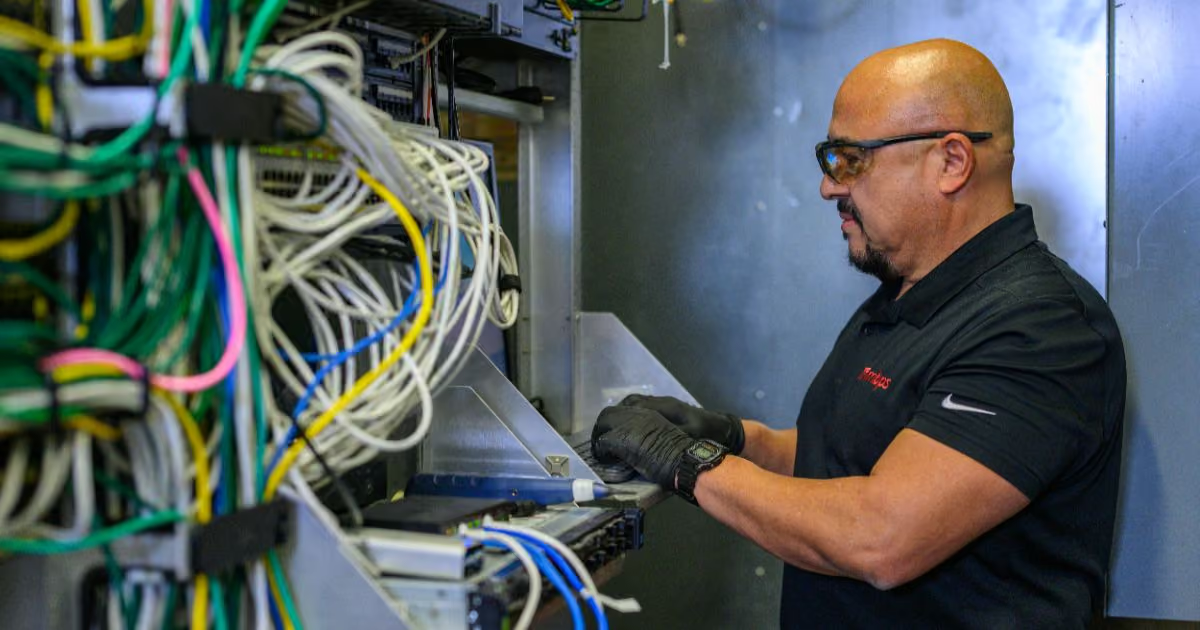
Network installation end to end: racks and cabinets mounted, switches and routers configured to a written standard and labeled so the next person can read the room, firewalls placed where they belong, and every port documented. Network cabling from the patch panel to the last drop, tested and certified rather than plugged in and hoped for. Switch and router configuration with VLANs that separate what should never mingle, guest traffic walled off from production, and every device configuration backed up so a dead switch is an hour of downtime instead of a lost weekend. And SD-WAN deployment that ties multiple offices and cloud services into one managed edge, with failover that has actually been tested to fail over.
Design before hardware
Every network infrastructure services engagement starts with design, not a parts list. We survey the space, count the drops, check the pathways and the power, and put the whole thing on paper first: what runs where, what it costs, and what it will still handle five years from now. On new construction and remodels we coordinate directly with the general contractor and the electrician, because conduit is cheap while the walls are open and expensive forever after. A design on paper costs a fraction of a redo in copper.
The work itself follows published standards for structured cabling and pathways, the discipline organizations like BICSI exist to maintain, and you receive the test results for every run, not just an invoice.
SD-WAN for more than one address
Companies with two or more locations used to rent point-to-point circuits and pray. SD-WAN replaces that with intelligent routing over ordinary internet connections: traffic takes the best path available, a failed link fails over in seconds, and voice and video get priority over someone's lunchtime streaming. For a single office it is optional; for three offices it is the difference between one network and three feuding ones. It pairs naturally with unified communications, where call quality lives and dies on the network underneath it.
How a buildout runs
Network infrastructure services quote from counts, not vibes: how many drops, how many closets, how many sites, what has to keep running while we work. You get a fixed number and a schedule before anything is ordered. Cutovers happen after hours or in stages, because the network being rebuilt is usually the network the business is standing on. At handoff you receive the documentation set: port maps, configurations, test certifications and photographs of every closet, which is the difference between owning your network and renting knowledge of it from whoever built it.
After the buildout
A finished network still needs watching. Most clients fold the result into managed services, where network infrastructure services shift from project to upkeep: monitoring, firmware, configuration backups and the quiet discipline that keeps January's network identical to June's. Security layers on top through network security services and a managed firewall, and WiFi installation completes the picture for the part of the network without wires.
MBPS provides IT services in Phoenix, Las Vegas and Houston.