Break in before someone else does
Penetration Testing Services
A vulnerability scan tells you a window is unlocked. A penetration test climbs through it, opens the safe, and hands you photographs. One is a report. The other is proof.
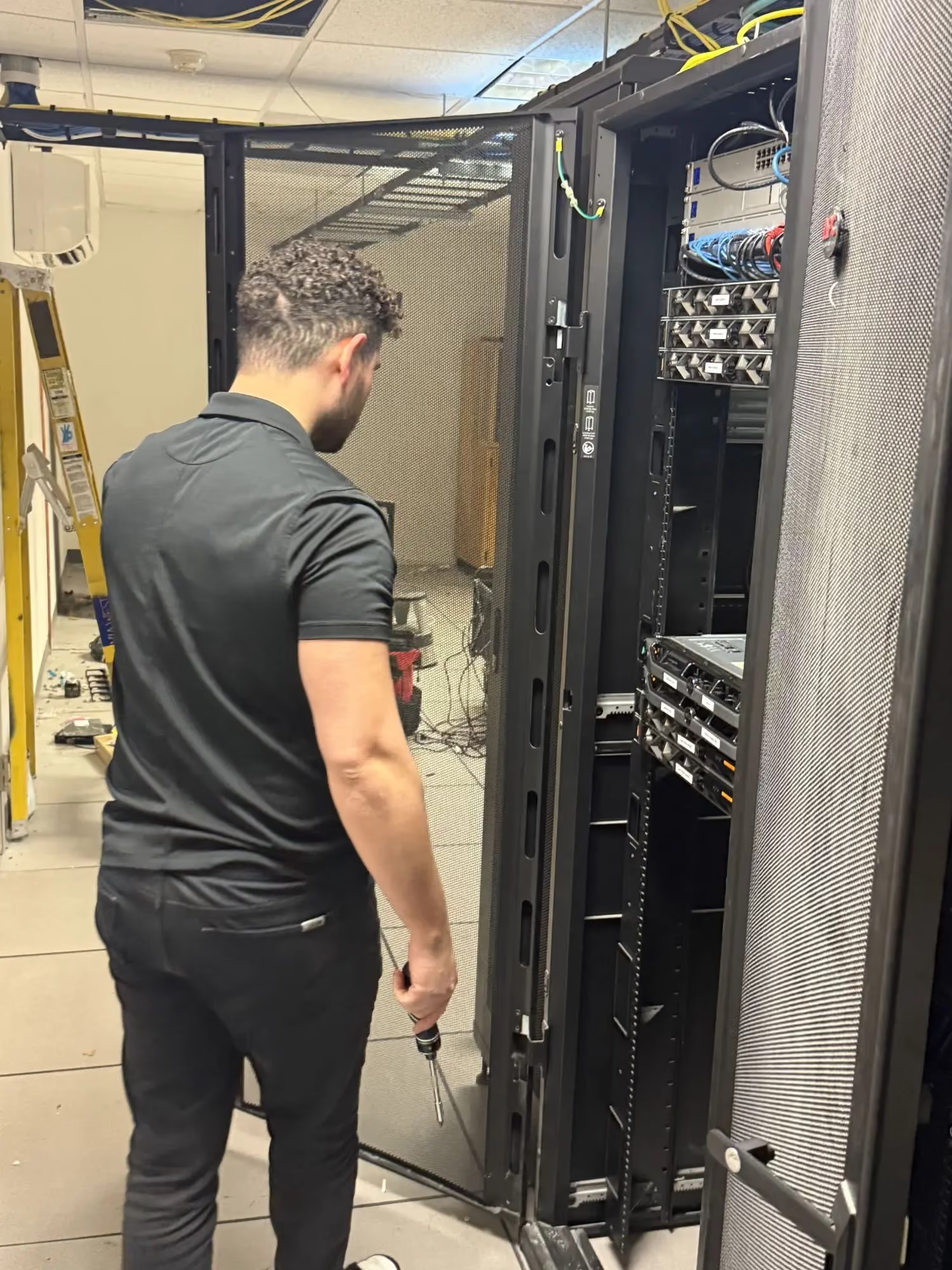
What our penetration testing services involve
A scoped, authorized attack on your environment, performed the way an actual intruder would work. External testing probes what the internet can reach: your firewall, your VPN, your mail defenses, the login pages you forgot were public. Internal testing assumes the attacker is already inside, a compromised laptop or a malicious hire, and measures how far they get. Where agreed, social engineering tests the human layer with phishing that looks exactly like the real thing, because it is modeled on it.
Everything runs under a signed rules-of-engagement document. Scope, timing, exclusions and emergency contacts are fixed on paper before a single packet moves. Nothing gets tested without sign-off, and nothing signed off goes untested.
Why businesses commission one
Sometimes an auditor or a cyber insurance carrier demands it. PCI DSS requires testing for anyone handling card data, and carriers increasingly price premiums on the result. Sometimes a client contract requires proof of testing before signature. And sometimes an owner simply wants the honest answer to an uncomfortable question: if someone competent came after us this quarter, would they get in? Penetration testing services answer that with evidence instead of assurances. The OWASP testing guide describes the methodology world, but methodology is not the deliverable. The deliverable is knowing.
The report you actually receive
Two documents, on purpose. An executive summary in plain English that a board or an insurer can read, ranking what was found by real-world consequence rather than raw CVSS score. And a technical appendix with reproduction steps, evidence and specific fixes, so remediation is a checklist rather than a research project. Findings get a retest window included, because a report that says broken without later saying fixed is half a product. You also get a debrief call where the tester walks your team through the path they took, in plain language, question by question.
Scoping and cost, in plain terms
Penetration testing services are priced by scope, not by fear. The honest variables: how many external addresses face the internet, how many internal systems and users sit behind them, whether web applications need testing at the application layer, and whether phishing is in or out. A focused external test on a small footprint is days of work. A full external, internal and social engineering engagement across two offices is weeks. We quote both the same way, in writing, with the assumptions listed. The number and the dates go into the rules of engagement before anything starts, so the project cannot grow a surprise invoice.
Timing matters as much as price. Most clients schedule penetration testing services ahead of an audit, a cyber insurance renewal or a contract signature, and we work backward from that date so the retest window closes before the paperwork is due. Rush engagements are possible, but planned ones are cheaper and calmer for everyone. If you are not sure what scope you need, ask, and we will size it honestly.
After the test
Most findings land in patching discipline, exposed services and weak authentication. Ongoing vulnerability management keeps the first two from regrowing between tests, and multi-factor authentication quietly kills the third. If the test surfaces something burning, our security team moves from assessment to remediation the same week. Either way, you end the engagement knowing exactly where you stand, which is the entire point.
MBPS provides IT services in Phoenix, Las Vegas and Houston.